Desaster

Desaster

Desaster

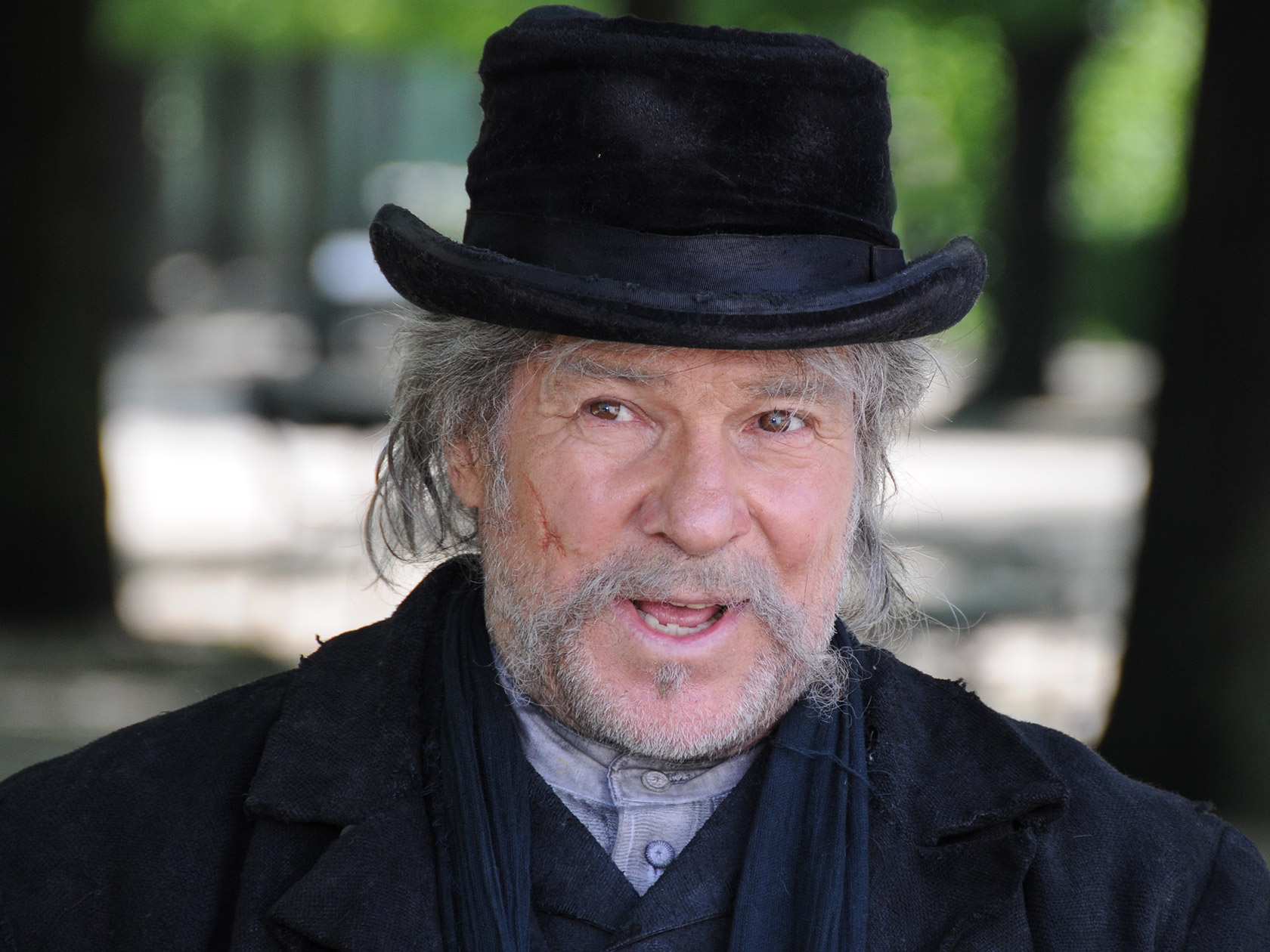
After the surprise success of “Bis zum Ellenbogen”, the new, pitch-black gangster comedy by and with Justus von Dohnányi, Jan Josef Liefers, Stefan Kurt, Anna Loos and Milan Peschel.

The two professional killers Ed and Mace get the order from the corrupt lawyer Dr. Würsch to rob gunrunner Mischa in his villa in St. Tropez. A plan that other petty criminals also forge, and so begins an absurd chase for big money, in which people die for all they’re worth without a single shot being fired.

Credits

Cast: Justus von Dohnányi, Jan Josef Liefers, Stefan Kurt, Anna Loos, Milan Peschel, Max Simonischek, Angela Winkler, Oskar Ortega Sanches

Screenplay: Justus von Dohnányi
Director: Justus von Dohnányi
Camera: Ralf Noack
Editing: Olivia Retzer
Production design: Johannes Fischer
Props: Maxi von Dohnányi
Costume: Katrin Aschendorf
Mask: Peter Bour
Sound: Claudia Mattai del Moro
Production Management: Jonas Witsch
Co-producer: Ellenbogen Film, Radio Doria Entertainment, STUDIOCANAL
Producer: Martin Lehwald, Marcos Kantis, Michal Pokorny
Commissioning Editor: Hessischer Rundfunk, Jörg Himstedt
Broadcaster: HR, arte
Funding: German Federal Film Board, Medienboard Berlin-Brandenburg, Filmförderung Hamburg Schleswig-Holstein
Production year: 2015

Scene from Disaster
Scene from Disaster
Scene from Disaster
Scene from Disaster
Scene from Disaster
Scene from Disaster
Scene from Disaster
Scene from Disaster

Manifesto

Manifesto

Scene from Manifesto

Manifesto

The Nationalgalerie at Hamburger Bahnhof, Museum für Gegenwart, Berlin presents a solo exhibition of Berlin-based artist Julian Rosefeldt from February 10 to July 10, 2016. Manifesto is an installation consisting of 13 parallel films and a tribute to the moving tradition of artists’ manifestos. Rosefeldt’s work emphasizes the literary beauty and performative energy of artists’ manifestos. He has collaged numerous original historical manifestos into 13 poetic monologues and presents them as a living, highly contemporary call in moving images.

Credits

Cast: Cate Blanchett

Screenplay: Julian Rosefeldt
Director: Julian Rosefeldt
Camera: Christoph Krauss
Editing: Bobby Good
Production design: Erwin Prib
Costume: Bina Daigeler
Mask: Morag Ross
Production Management: Anna K. Guddat
Production management: Vasily Zygouris
Executive producer: Marcos Kantis, Martin Lehwald, Vasily Zygouris

Producer: Julian Rosefeldt
Commissioning Editor: Cornelia Ackers (BR)
Production year: 2015

Mein Kampf

Mein Kampf

Mein Kampf

In 1910, the young Hitler travels from the deepest Austrian province to Vienna to conquer the whole world as a painter. He rents a room in a men’s home in Leichengasse to await the big day of the entrance examination to the Academy of Fine Arts. He shares the shabby shack, populated by countless workers and vagrants, with two Jews: the windy Bible salesman Schlomo Herzl and the kosher cook Lobkowitz, who claims to be God. sometimes he really performs miracles. The ageless Schlomo wants to write his own book: ‘My Life’ finds little favor here, ‘Mein Kampf’ all the more so. Adolf Hitler is also enthusiastic … The hospitable, philanthropic Schlomo feels responsible for the impetuous Hitler and takes care of him. But for Hitler, whom the ‘Academy of Fine Arts’ rejects for the second time days later, having overestimated his talents beyond measure, a world collapses. And again it is the good Schlomo who rushes to the aid of Hitler, who in his hopelessness is seeking death, at the last second. The behavior of the penniless, increasingly rebellious Hitler, who sinks into the gap between his own delusions of grandeur and his confirmed lack of talent, into hatred and paranoia, becomes increasingly unbearable for Schlomo. Hitler shamelessly takes advantage of Schlomo, who cooks for him, washes for him and even trims his mustache, and on top of that wrests the young Gretchen away from him. Ironically, it is Schlomo, of all people, who recommends that Hitler seek his fortune in politics. He apparently has certain leadership qualities. A short time later, Hitler joined a radical group that was willing to use any means to achieve its ambitious goals. He eventually pushes his way to the top of them.

The film grotesque MY FIGHT, based on Tabori’s fabulous play, which has been performed all over the world, is not a historical reconstruction of Hitler’s Vienna period.

Rather, it is the timeless parable of good serving evil, blurring the lines between reality and fiction.

Credits

Cast: Götz George, Tom Schilling, Wolf Bachofner, Bernd Birkhahn, Paul Matic, Karin Neuhäuser, Elisabeth Orth, Henning Peker, Simon Schwarz, Anna Unterberger

Director: Urs Odermatt
Camera: Jo Molitoris
Composer: Enis Rotthoff
Editing: Lilo Gerber, Claudio Cea
Production design: Carola Gauster
Costume: Thomas Oláh
Make-up: Roland Krämer, Julia Stephanie Lechner, Irene Storig
Sound: Dietmar Zuson
Production management: Frank Zahl
Production management: Michal Pokorny
Co-producers: Danny Krausz (DOR Film), Christof Neracher (Hugofilm), Thomas Peter Friedl, Oliver Berben
Producer: Martin Lehwald, Michal Pokorny, Marcos Kantis
Commissioning Editor: ZDFtheaterkanal

Supporters: Mitteldeutsche Medienförderung, German Federal Film Fund, German Federal Film Board, Medienboard Berlin-Brandenburg, HessenInvestFilm, The Federal Government Commissioner for Culture and the Media, MEDIA Program of the European Union, Austrian Film Institute, Federal Office of Culture, Zurich Film Foundation

Production year: 2009

Festivalteilnahmen
  • Festival des Film du Monde Montreal
  • Atlanta Jewish Film Festival
  • 45th Solothurn Film Festival nominated for the “Prix du Public” audience award
  • Berlinale (German Cinema)
  • Diagonale Graz
  • Audi Festival Of German Films, Australia
  • Taipei Film Festival
  • Munich Film Festival
  • Jewish Eye World Film Festival, Israel
  • Sao Paulo International Film Festival
  • Zagreb Jewish Film Festival
Scene from Mein Kampf

Der Kuckuck und der Esel

Der Kuckuck und der Esel

Der Kuckuck und der Esel

“Der Kuckuck und der Esel” tells the story of an obsessed author with wit, toughness and social relevance. He tells of the destructive influence of television channels on German cinema and of the furious power to rebel against it. The film also tells the story of the idiosyncratic Weitzmann family, who live in the countryside near Berlin. Ten years ago, after the death of his mother, the author Conrad Weitzmann, who until then had had little success, decided to make a film of his parents’ love story. For him, it is the greatest love story of mankind, the filming of which the ancient father should damn …

You are currently viewing a placeholder content from Vimeo. To access the actual content, click the button below. Please note that doing so will share data with third-party providers.

More Information

Credits

Cast: Joost Siedhoff, Thilo Prothmann, Jan Henrik Stahlberg, Marie Schöneburg, Gertie Honeck
Screenplay: Andreas Arnstedt, Horst Fichte
Director: Andreas Arnstedt
Camera: Moritz Anton
Composer: David Orlowsky Trio, Nicolette Richter
Editing: Sylvain Coutandin
Production design: Stefan Rohde
Props: Josef “Zeppy” Hausstätter, David Peichl
Costume: Marthe Labes, Sarah Marleen Methner
Mask: Ninette “Nini” Hennig, Gesa-Lina Wasle
Sound: Julian Cropp
Mix: Manfred Mvié Bauche
Production management: Stefanie Kömm
Co-producer: Andreas Arnstedt
Producer: Martin Lehwald, Marcos Kantis, Michal Pokorny
Production year: 2014

Preise

New German Cinema Award 2014

Festivalteilnahmen
  • Zurich Film Festival
  • São Paulo Int. Film Festival
  • Hof Film Days
  • Attention Berlin
Scene from The Cuckoo and the Donkey

Große Lügen

Große Lügen

Scene from Big Lies

Große Lügen

Devi, who is in her mid-thirties, is in a life crisis. She walks dogs in Prenzlauer Berg and has neither a husband nor a child, nor a stellar career. She is also researching her great childhood sweetheart “Jonny Miller”, of whom, however, she only knows that he lives in New York. The search is correspondingly unfruitful.

She feels her biological clock ticking, wants to change her life and therefore resolves not to take off the shoes she has just bought “until that happens”.

Devi decides to leave everything behind, sublet her “apartment with stove heating” and go straight to New York to look for “Jonny Miller.” But first she wanders through Berlin, meets all kinds of bizarre characters, gets to know Gregor, her mother’s new boyfriend, and tells her less than enthusiastic friend Undine about her plans.

But everything changes when she has to take care of the child of a mother friend for some time. Completely filled with this new task, her plans fall into the background.

A letter turns up and in psychological family constellations under the guidance of Gregor, she finally learns the shocking truth about “Jonny Miller” and her family. The situation escalates.

Credits

Cast: Anna Thalbach, Natascha Bub, Claudia Mehnert, Sissy Höfferer, Michael Greiling, Johannes Brandrup

Screenplay: Jany Tempel
Director: Jany Tempel
Camera: Helmfried Kober
Composer: Rainer Oleak
Editing: Cetin Tutak
Production design: Carola Gauster
Costume: Elke Zetl
Make up: Kristin Eichhorn
Sound: Thomas Pfeiffer
Production Management: Gunnar Juncken
Producer: Martin Lehwald
Sponsor: The Federal Government Commissioner for Culture and the Media (film award funds)
Production year: 2005

Preise
  • Film Festival Max Ophüls Preis 2005
    Audience Award of the German – French Student Jury
Scene from Big Lies
Scene from Big Lies
Scene from Big Lies
Scene from Big Lies